The Squeeze

Make it obvious
what customers get from you

The Squeeze is a four-workshop positioning sprint for early-stage AI-native B2B SaaS companies. Your new positioning lives in the wireframes we build for your website, so your whole company finally sells the same thing.

4 workshops plus delivery, 5 sessions total Three weeks, $5,000 flat For early-stage AI-native B2B SaaS companies

Don't take my word for it. Yet.

We met about eight seconds ago, so before I tell you anything else, here's what the two founders I most recently ran The Squeeze with had to say. You'll get plenty of me and my slight German accent further down.

"We used to do fifteen things and communicate fifteen different ways to fifteen different people. I lost leads because of it, conversations meandered and deals slipped. Now I know what our core value proposition is, and every conversation is focused from the first minute: who it's for, what the problem is, and where to drive it."

Shayaan Jagtap
Shayaan JagtapCo-founder, Opptrack
"Before, I knew I had to do something about our positioning. Now I know what I should do about it. I'm more confident in the direction, the homepage is mapped out, and the people signing up now are exactly the ones we decided to go after."

Toni Hopponen
Toni HopponenCo-founder, LandingRabbit

Some of the companies I've worked with:

Opptrack LandingRabbit MagicPost Synthesia

Do you actually have a positioning problem? See for yourself.

Quick gut check. Tap every one that stings.

  1. Could your competitor steal your headline and nobody would notice?
  2. If you asked three teammates what you do, would you find out you run three different companies?
  3. When a buyer asks what you compare to, is the honest answer "great question"?
  4. Do your sales calls always end up being about the price?
  5. Have you rewritten the homepage twice and it somehow got vaguer both times?
Answer all five first.

The main deliverable: your homepage, ready to build

You get two things. The main one is a wireframed homepage with every section laid out and every word written, so you hand it to whoever builds your site and say "build this."

Behind it sits a sales deck built on the new positioning, the one you actually open on a call. It makes sure every pitch tells the same story the homepage does, and your buyer knows what you do, who it's for, and what it replaces before anyone mentions price.

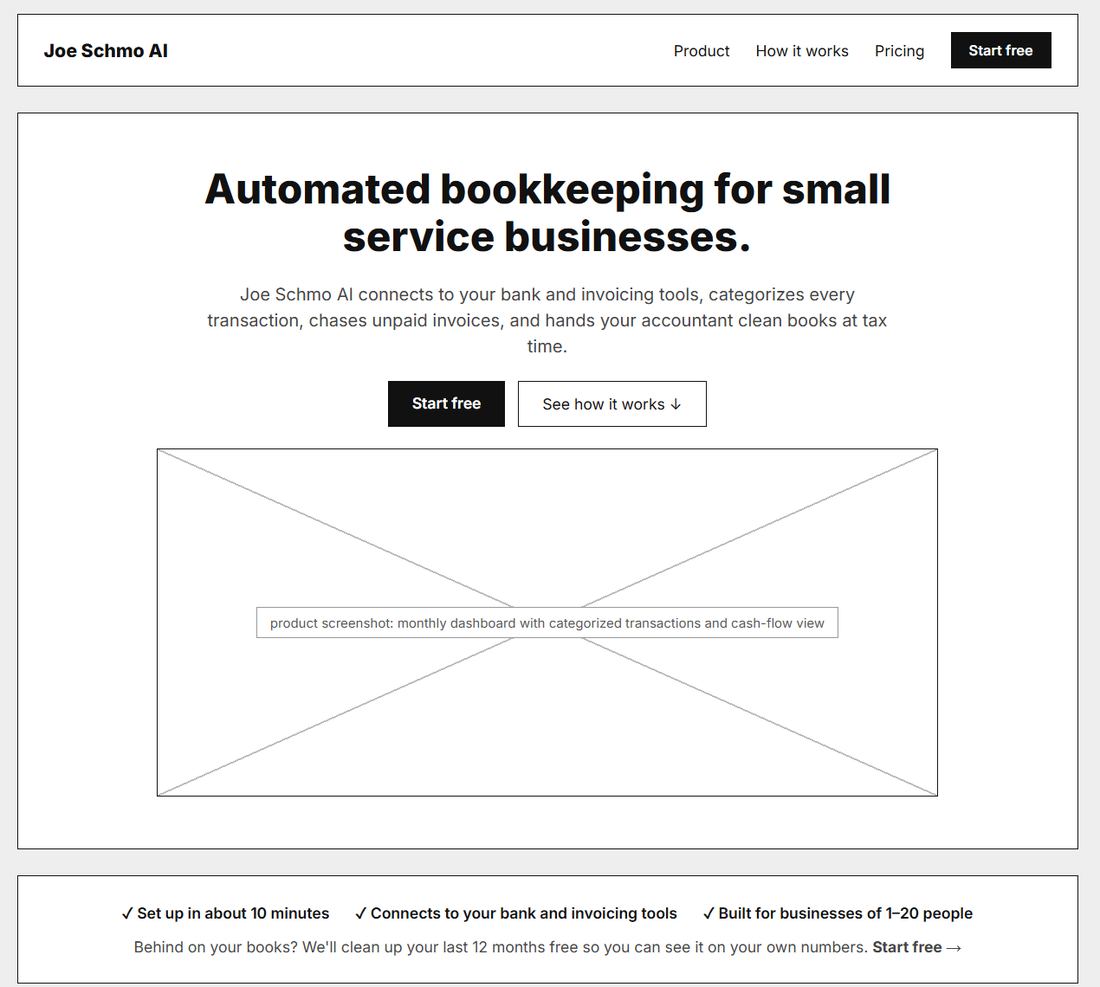
A wireframed homepage from The Squeeze, with headline, subhead, and section copy written out
Looks suspiciously like something I built for a customer of mine. Shoutout Joe Schmo AI.

Four workshops. One story.

These aren't lectures, and I don't write the answers for you. You do the thinking on a shared board while I ask questions and push back until the answer comes out of your head, in your words.

That part matters, because positioning you arrived at yourself is positioning you'll actually defend on a sales call. The stuff that gets handed to you in a deck gets abandoned two weeks later for a shiny new feature.

1

Who buys it

We find your best-fit customer and what they do without you.

2

What makes you different

We map what competitors can't copy and why it matters.

3

Who cares most

We decide how the market should think about you.

4

Make it stick

We lock the positioning and turn it into your homepage.

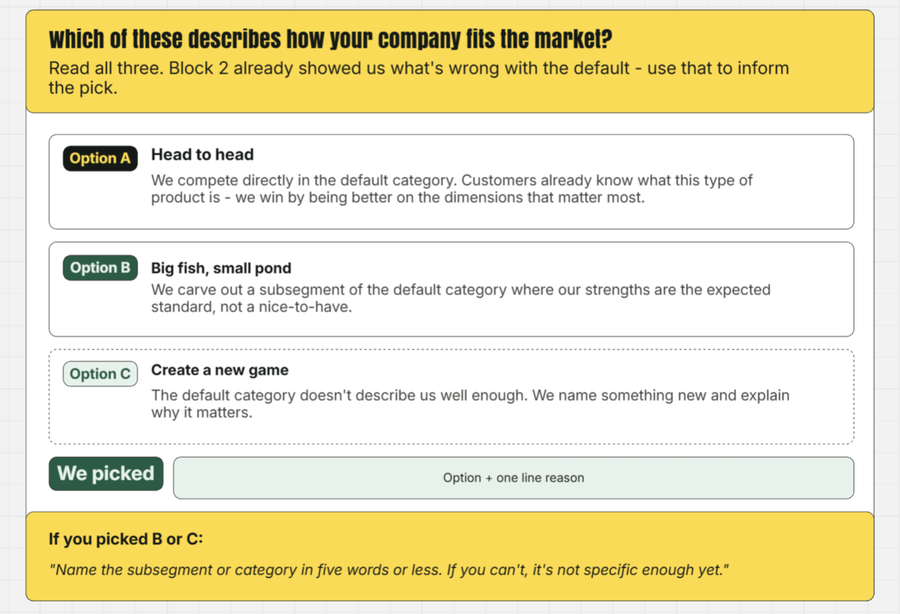
A workshop board asking which of three options describes how the company fits the market
A live board from workshop three. You pick, I ask the annoying follow-up questions.

Who it's for

Early-stage AI-native B2B SaaS companies that built something unique that rocks. Usually it's a technical team that now has to explain the thing to people who weren't in the room. You know the product is different, you just can't say how in one sentence.

Not for you if you want a prettier website or a content plan. This is a positioning engagement, not a content strategy one: I won't write your blog, ghostwrite your LinkedIn, or hand you a posting calendar. The homepage is the output, not the point.

What changes when the story is clear

Better-fit customers can tell in five seconds you're for them, and the tire kickers filter themselves out before they ever book a call.

Price stops being the argument, because the buyer can finally see the difference they're paying for.

And your team stops improvising the pitch. Everyone sells the same company, including the happy customer describing you to a friend.

$5,000. Flat.

That covers the four workshops, the delivery session, the wireframed homepage with every word written, and the sales deck your team pitches with. Your time investment is five sessions over three weeks, and the rest is me.

The price is on this page because I'd want to know too. The call is for checking fit, not revealing numbers.

Fair questions

"So you build websites?"
No. I give your positioning a home your whole team can point to. The homepage is where it lives, not what you're buying.
"Can't we just do this with ChatGPT?"
You can, and it will agree with everything you say. Positioning is exactly the work that dies without pushback. The thing tells you your draft is great because it wants you to come back, not because your draft is great.
"Can't we just hire a copywriter?"
Sure. A good one will ask who it's for and what it replaces. If you can't answer, you're paying for well-written vagueness.
"We're still figuring out our ICP. Too early?"
If you have real users and real sales calls, no. The workshops pull the pattern out of what's already happening. Zero users? Wait.
"We don't have three weeks."
Your time is five sessions. The rest is me.
"What does it cost?"
$5,000, and it's already on this page. No proposal theater.
Simon Schmitz

Who's behind this

I'm Simon. Lemoncore is just me, on purpose. The person on the call is the person doing the work.

I spend my days inside a B2B SaaS company watching buyers react to software, and my nights tearing down vague AI startup homepages on LinkedIn. The Squeeze is where both habits pay off.

Stop being the best-kept secret in your category.

Book a call. I'll read your site before we talk and tell you the three things I'd change. Whether we work together or not.